

COLUMN: The Projectionist #9
John Wilson and His Antecedents



Of all the films that screened at this year’s Sundance Film Festival, perhaps my most anticipated is the documentary The History of Concrete by filmmaker John Wilson. Two of the film’s executive producers are Josh Safdie and Ronald Bronstein, who made Marty Supreme, which is still playing in some theaters and just became available to rent or purchase digitally.
The synopsis for Wilson’s film from the Sundance website reads:
“After attending a workshop on how to write and sell a Hallmark movie, filmmaker John Wilson tries to use the same formula to sell a documentary about concrete.
Documentarian and observational humor connoisseur John Wilson makes his feature directorial debut with a film that is effortlessly hysterical and genuinely hard to describe. The How to With John Wilson creator’s quick, permeating wit and boundless curiosity clock in, this time through the lenses of urbanism and, somehow, the institution of Hallmark.
A heady comedic whiplash emerges as Wilson bounces between (literal) textures of the mundane. Underlying Wilson’s well-established, unique filmmaking language are both an intellectual specificity and a strangely leveling impulse — a fascination with the breadth of American life and the built environment that contains it.
The History of Concrete rests on a pure, generative desire to give warmth to the invisibly ubiquitous, answering key questions such as: ‘Who removes the gum from our sidewalks?’ This is an unassumingly strange, joyful documentary that no one else could have made, perfect for the chronically online, the studied philosopher, and everyone in between. — CA”
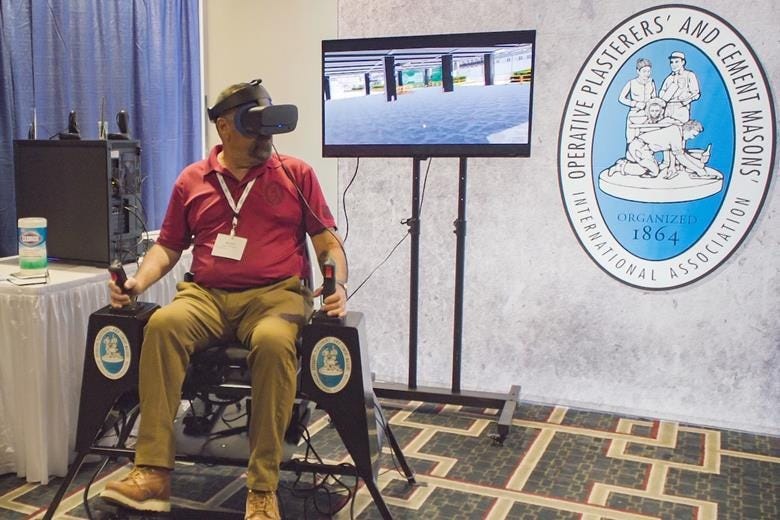
The aforementioned How to With John Wilson is the filmmaker’s comedic documentary series (available on HBO Max), which premiered on October 23, 2020, and ran for three seasons, six episodes each, covering New York life and raising trivial and existential questions just before and during the Covid pandemic. The show, according to Vox, was “unlike anything else on TV.”
Shot in cinéma vérité form and narrated by Wilson, the series is a collection of subjective essays focusing on the archival, sociological, anthropological, economical, systemic, experimental, and tangential, beginning somewhere in New York City and taking him on offbeat adventures. It’s as curious and informative as it is funny and entertaining. Furthermore, a documentary series that employs both author Susan Orlean and comedian Conner O’Malley on its writing staff, with Nathan Fielder (Nathan for You, The Rehearsal) serving as an executive producer, is going to have my attention.
Wilson’s point A to point B journey is never a straight line. His going off-topic from his original search while somehow returning to his original put-forth question is what helped make the show an eye-opening and educational phenomenon, or as The Fader puts it, “The end product is somewhere between cinéma vérité and a livestream of a video game where the side quests become the main focus.”
In 2020, after the first season aired, acclaimed veteran documentary filmmaker Errol Morris (Gates of Heaven, The Thin Blue Line, The Fog of War) tweeted about the show and its creator: “Still a John Wilson fan. There is fiction, documentaries, and then there are metaphysical essays. Who would have thought that a show about covering your furniture could be both incredibly funny and profound?”
A first season episode about scaffolding is a fan and cultural favorite. In fact, when I recently told a colleague Wilson had a feature documentary at Sundance, he told me said scaffolding episode was one of his favorite half hours of television ever.
Good news for fans of the show, then, as The Guardian’s 4-star review says The History of Concrete is “essentially a 100-minute version of a How To episode, with extra diversions and the added absurdity of Wilson’s newfound status as a celebrity, of sorts.”
More positive reviews from Sundance are out, and Wilson has been promoting the film with interviews as well. I, however, have been avoiding much of them because the surprise and wonder of his work is part of the experience, and I feel like I already know too much.
The History of Concrete didn’t take home any Sundance awards and, as of this writing, is still seeking distribution. In the meantime, let’s explore some of Wilson’s antecedents. Back in 2020, Wilson wrote an interesting article for Talkhouse about who some of his influences are and why, and he includes films and books, giving us a watchlist and a reading list to explore on our own. He mentions a few more in this interview at Mubi–filmmakers such as Nick Broomfield, Penelope Spheeris, and Louis Theroux are included in these articles. Here are a few filmmakers and films I would like to add.
Sociologist William H. Whyte (who died on his 82nd birthday in 1999) worked with the New York City Planning Commission to observe and document human behavior in urban public settings, particularly plazas and parks, and how architecture and city dynamics play their part. The result is the book and film The Social Life of Small Urban Spaces (1980), a fly-on-the-wall look at these locations and behaviors. Imagine a National Geographic-esque study, but instead of play-calling a lion killing a hyena, the narrator predicts a man (almost always) will move an available chair in a public square.
Wilson has said the educational film was an inspiration for How To, and it’s instantly easy to see why: exterior images, running commentary by the documentarian, lightheartedness, a deluge of information, the capturing and archiving of city life.
If you begin watching this film and wonder if you’ll make it through its hour-long runtime, yet twenty-five minutes into it find yourself fascinated and riveted, then we are comrades. Social Life of Small Urban Spaces is available on YouTube.

Wilson cited filmmaker Agnes Varda in the Talkhouse piece, particularly her 2000 documentary The Gleaners and I (available on The Criterion Channel) about foragers of discarded food and objects in the city as well as the country (I’m personally fond of a seemingly non-sequitur moment in the film about her “dancing lens cap”). I would imagine he’s also a fan of Faces Places (2017, available on Kanopy or to rent on Prime Video), which she made with the French photographer and street artist JR. The film follows the two and their road trip in the French countryside, bringing humor and tenderness along with them, and documenting residents and creating large portraits of them for public display. So, you get a lot of moments of exteriors and whimsy.
Filmmakers Les Blank and his son Harrod Blank have been listed by Wilson as among his influences, and Harrod’s 1992 doc Wild Wheels was mentioned, specifically, for its opening scene of a man who is trying to get out of a citation because he thinks he’s being discriminated against due to his customized Art Car.
Pick any of Les Blank’s films for potentially apt examples, whether its A Poem Is a Naked Person (1974), where Blank follows singer-songwriter Leon Russell recording and performing in Oklahoma a la D.A. Pennebaker’s Bob Dylan doc Don’t Look Back (1967), Burden of Dreams (1982) chronicling German filmmaker Werner Herzog’s haywire production of Fitzcarraldo (1982), or Werner Herzog Eats His Shoe (1980) about Herzog losing a bet to Errol Morris and having to pay up.
All of the aforementioned Blank films are available on The Criterion Channel.
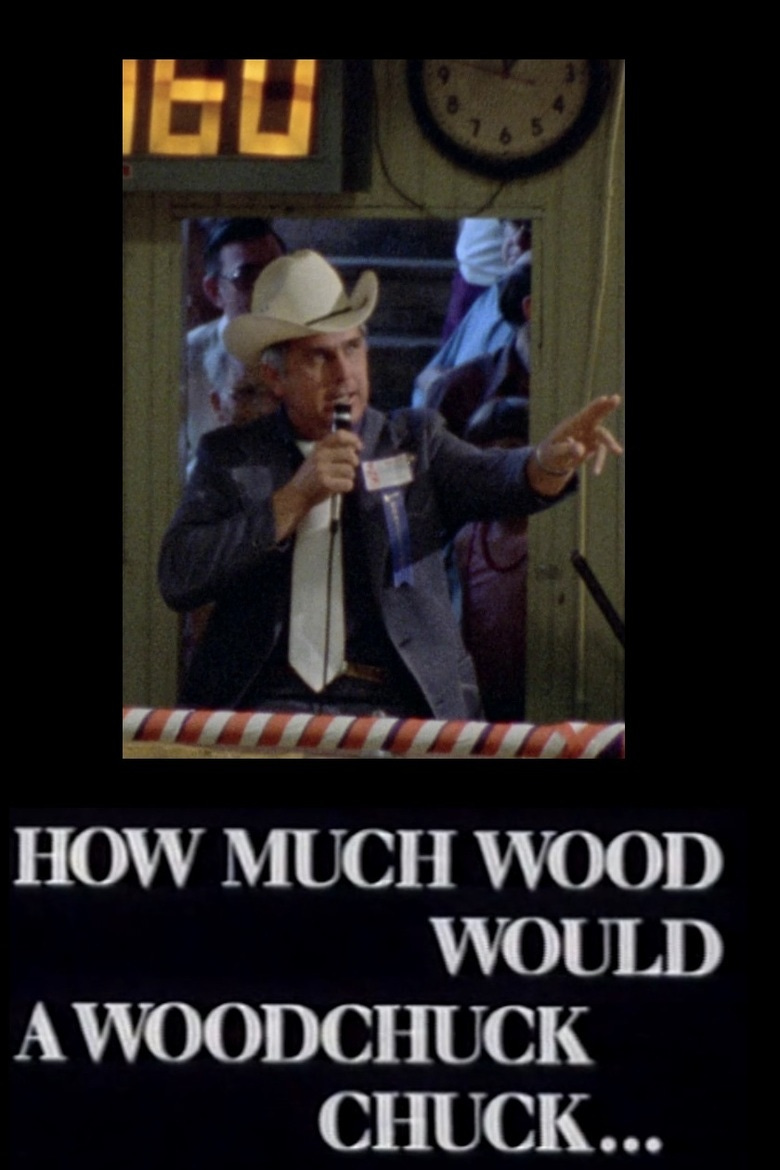
Speaking of Herzog, Wilson has not explicitly talked about the filmmaker’s influence on his work, or at least not that I have found, but when you see the former’s films like How Much Wood Could a Woodchuck Chuck? (1976) about the World Livestock Auctioneer Championship and Lo and Behold, Reveries of the Connected World (2016) where Herzog considers the virtual world’s impact on humanity, for example, the sway seems inescapable. (Incidentally, both Wilson and Herzog ventured to Green Bank, WV, for How To and Lo and Behold, respectively.) Again, here we have the filmmaker narrating his own observations and raising existential questions in the process.
Herzog has made more documentaries than features and The Criterion Channel has several of them. Lo and Behold, however, is available on Kanopy or to rent on Prime Video.
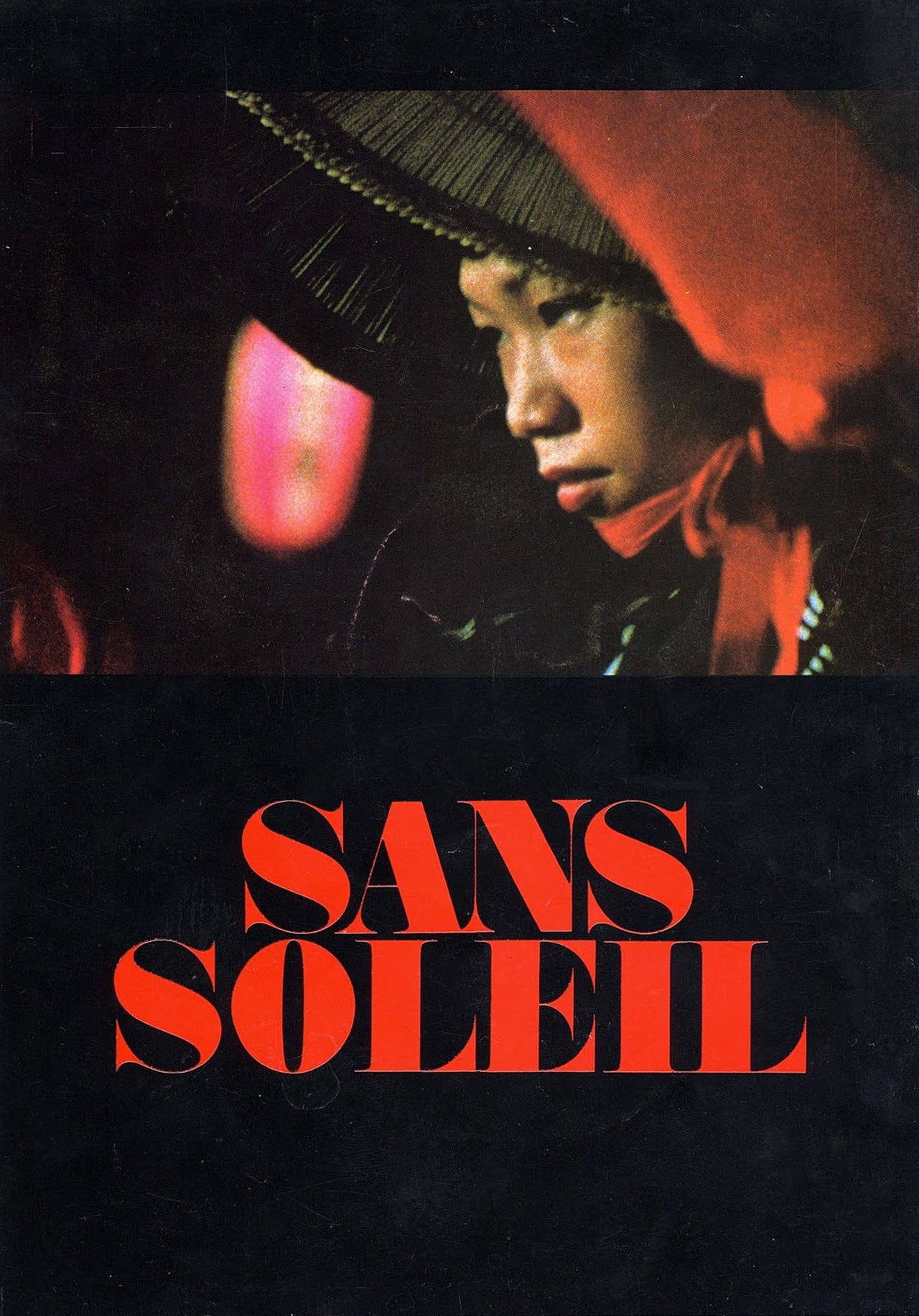
French filmmaker Chris Marker and his experiments with travelogue also seem like an obvious antecedent to Wilson’s work. For example, his 1956 short travelogue Sunday In Peking or his seminal 1983 experimental epistolary essay film Sans Soleil where he juxtaposes travelogue (again) with letters and documentary footage, exploring memory and humanity by way of images. Marker’s Letters from Siberia comes up in this 2021 Believer interview with Wilson where he says he’s downloaded the film but hadn’t watched it yet. All three films are available on The Criterion Channel.
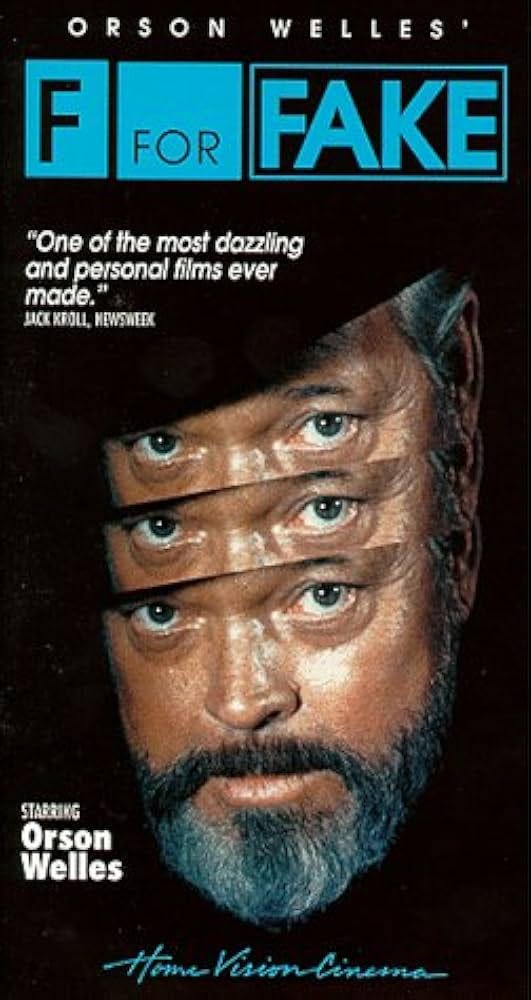
Perhaps the king of the subjective essay film is Orson Welles’ 1973 effort F for Fake, where the director explores the art of fakery and the intersection of authenticity and deception (including the deception of cinema). Welles inserts himself into the documentary as master of ceremony, as it were. I wish he could have made several more subjective non-polemical essay films. He was on to something. The film is available on HBO Max and The Criterion Channel. Here is a Bertha DocHouse list of five films to watch after F for Fake.
Some other documentaries I have watched recently that one could spiritually add to this list include cinéma vérité pioneer D.A. Pennebaker’s five-minute Daybreak Express (1953) on The Criterion Channel (also on YouTube) where he juxtaposes NYC train footage with Duke Ellington’s eponymous piece of music; Danny Wu’s American: An Odyssey to 1947 (2023) on Prime Video, where Orson Welles’ career connects with the stories of a Black World War II soldier and a Japanese American boy; Jeremy Workman’s Secret Mall Apartment (2024) on Netflix, exploring hidden mischief and subversive public art; Courtney Stephens and Pacho Velez’s The American Sector (2020) rented on Prime Video about parts of the Berlin Wall displayed across the U.S. in a range of venues and contexts; and Ross McElwee’s all-timer Sherman’s March (1985) on Kanopy, which tells parallel stories of the Civil War general and the filmmaker’s search for love (he revisits the work in his upcoming Remake)..
By the way, if you find yourself in Queens, NY, you could take in a movie at Low Cinema, a micro-theater co-owned by Wilson in the Ridgewood neighborhood. They even sell toothbrushes to help get the popcorn kernels out of your teeth.
I love How to With John Wilson so much.
What timing! The British Film Institute just posted on IG about Daniel Farson, saying he was "the Louis Theroux of his era" and a "ground-breaking investigative journalist, reshaping approaches to screen reportage with his independent television films."
So, let's add him to the list: https://www.instagram.com/p/DUWAaLzDLt8/