

DISPATCH: Poet Tree Magazine Issue #2 Launch at TJ Byrnes, New York
Celebrating the handmade poetry magazine that doubles in size with every issue

I came up to NYC, from Philadelphia, for my friend Jonathan’s launch of Poet Tree, issue #2. It was my first time visiting NYC as a Philadelphian, which I’d become as recently as three months ago. I waited in a line to get on the train and then sat next to a man having what sounded like a business call but ended up being a conversation with his mother and then I was there.
When I walked up the stairs to Jonathan’s apartment before the reading, I was already sweating through my beige T-shirt. This meant that no matter how hot it got at the venue, I would have to wear a cardigan over the shirt in order to not look sweaty. I assured myself that it wouldn’t be a proper dispatch without some wardrobe malfunction.
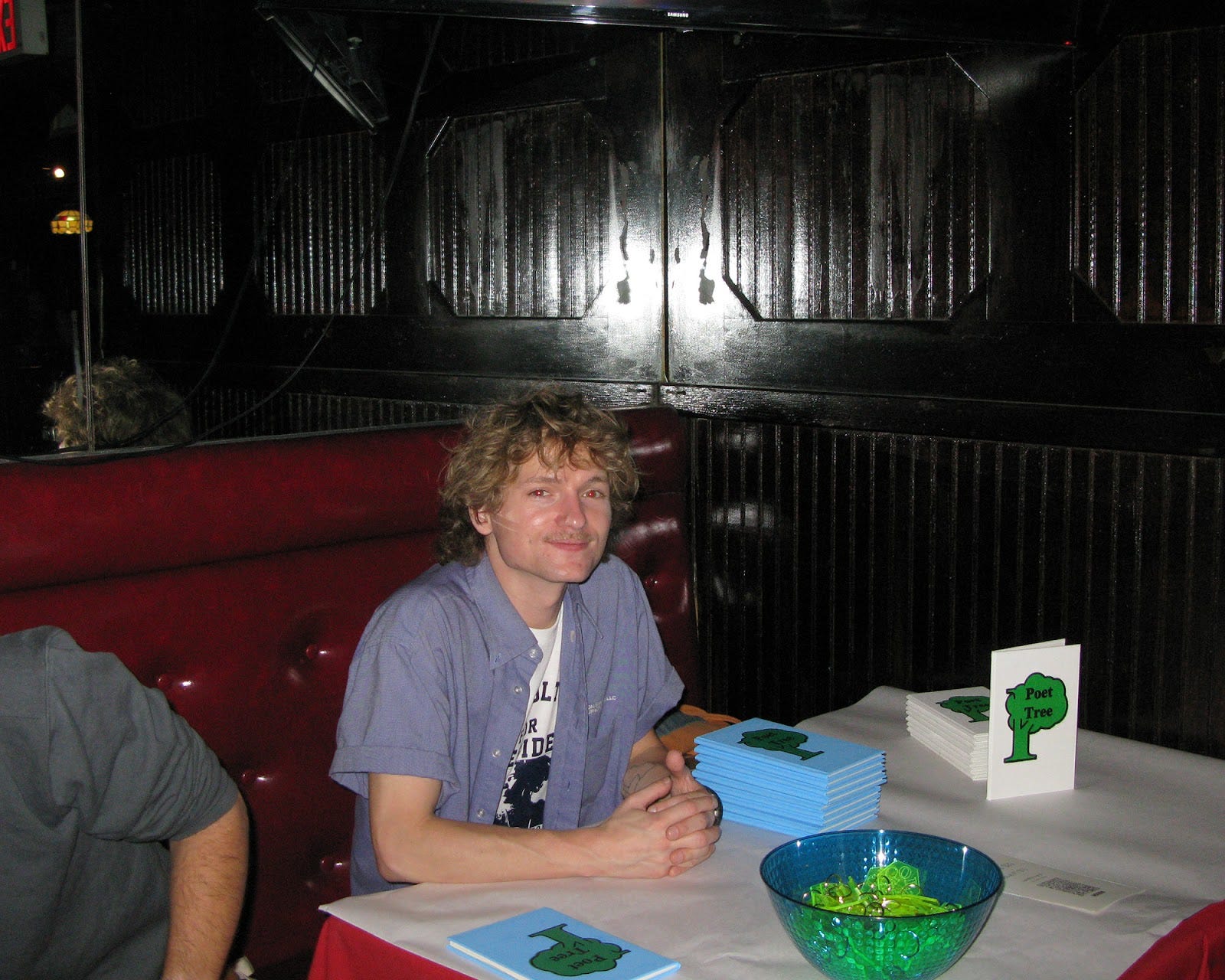
Jonathan had put together the magazine and was also the one hosting the launch. I asked him about his process to both help calm his pre-party nerves and to get dirt for the dispatch. Poet Tree is a magazine that doubles in size with every issue. It started with 16 poets in issue 1 and then gets bigger and bigger. Jonathan plans to end the project at issue 6, when the magazine will publish an absurd 512 poets. His description of making the magazine sounded like one of his poems, “Find the right materials, the paper that suits you…” But really, the effort of putting the magazine together is herculean. To produce this issue, Jonathan bought a special printer and book cloth and cover boards and glue and book binder’s thread, silkscreened the covers, taught himself how to bind pamphlet-style, and spent an uncountable amount of hours printing the issue, sewing it together, and trimming the edges of the text block. Just the last step, gluing the issue together, took 33 hours. And I hadn’t even asked him about the editorial part yet!
We carried 40 copies of the second issue and 10 copies of the first to TJ Byrnes. The bar was in a weird courtyard that combined a mix of apartments, businesses, crowded by high-rises. It reminded me of a show I went to in an abandoned, then repurposed office space, when I’d lived in Texas, though this was NYC, so things were generally functioning as they were intended to function.
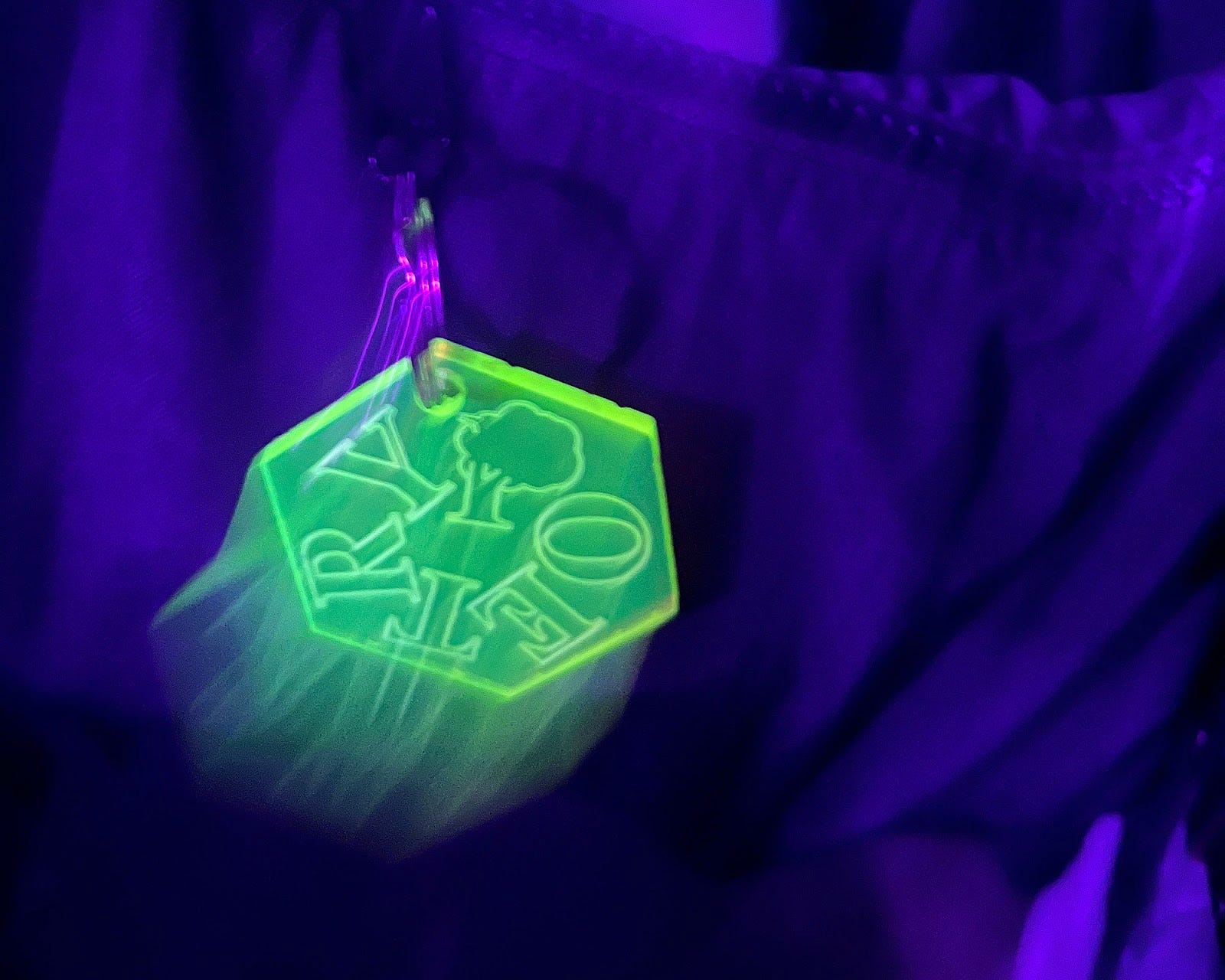
We were met by our friends, Alex and Walker, who got there after a chaotic dinner at the nearby Taco Bell. Jonathan briefly lost his friend James who was supposed to be manning the table selling copies and giving out free neon-green Poet Tree keychains, because James had to briefly run away to eat a slice of pizza.
I talked to Alex Sammartino, a fiction-writer friend who I hadn’t seen since 2017, about my current Pynchon phase, and he pulled out a copy of Against the Day from his bag. We were both stoked for the release of Shadow Ticket. Feeling anxious about the fucked state of modern life? I recommend some Pynchon, it’s the only prescription that’s worked for me.
I went outside to smoke a cigarette before the launch started and encountered Walker talking to a German woman and a British man, who were briefly intrigued by Poet Tree.
“It’s gonna get how big?” the German woman asked. “We’re waiting for the models to come out from the fashion show next door. Let us know if you see a bunch of people in white. The models are supposed to be dressed like fish, or like mermaids.”
Though we almost convinced the two of them to come to the reading, they weaseled away, claiming to need drinks at the bar.
Tonight, there were six readers at the launch. Jonathan asked the previous contributors to write introductions for them, which he read. Each issue of Poet Tree doubles because each poet in the issue chooses two poets to be in the next issue. The branching of Poet Tree is an ambitious attempt to encompass a wide range of poems and its various practitioners. When I asked Jonathan if each issue had its own unifying qualities, he said, “Each issue functions as a survey, like testing the water in a pool for chlorine, a sampling of the broader world of poetry.” In some ways, Jonathan’s project is a good solution to problems of curation. How do you make a journal that’s a fun thing to do with your friends but also captures a bunch of different kinds of voices? If you turn over the process of selection to other poets, they will pick other good poets, and they will inevitably choose poets that the person starting the magazine has never heard of, which is the whole point of Poet Tree.
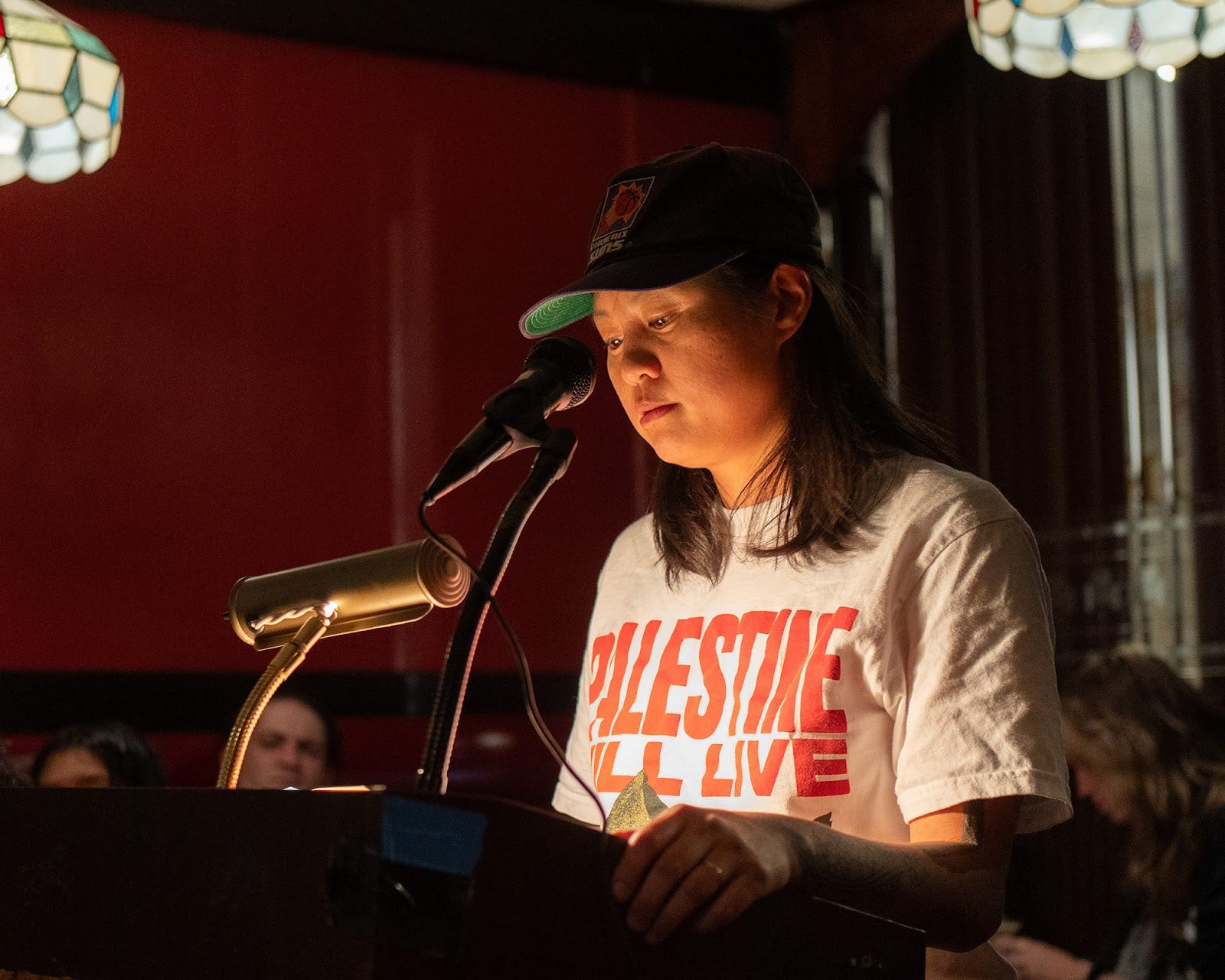
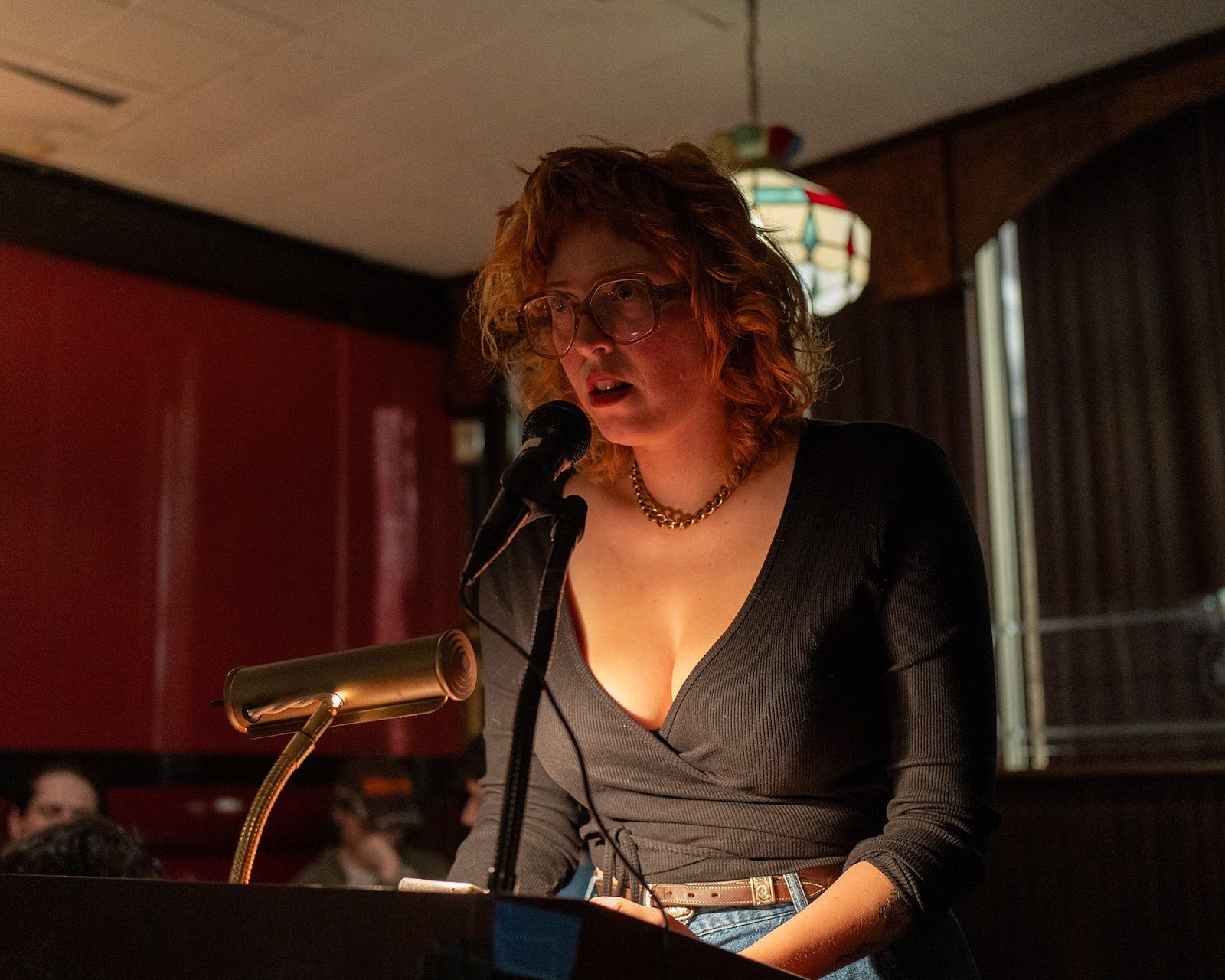
First up was Christine Shan Shan Hou. Terry Nguyễn, who selected Christine as contributor, wrote that “there’s a breezy, irresistible sensuality to her work.” From the issue, Christine read the stunning line, “All around the world apologies are being made for not being able to make sex fun.” Next came Corinna Rosendahl, whose poems were hard-edged, sweetened with surprising rhymes. She was introduced by the poet Patrick Dundon, who described reading Corinna’s poems as “a secret [he] got to keep.” Third was Morgan Boyle, who read two poems, the first a found poem from Craigslist furniture ads, from the magazine, and the second a long poem about dogs that made the audience laugh.
At intermission, I stood in a long bathroom line, only to see my German and British new friends spill out of the bathroom with three other people. I wondered what kind of drugs they had, and if they were any good.
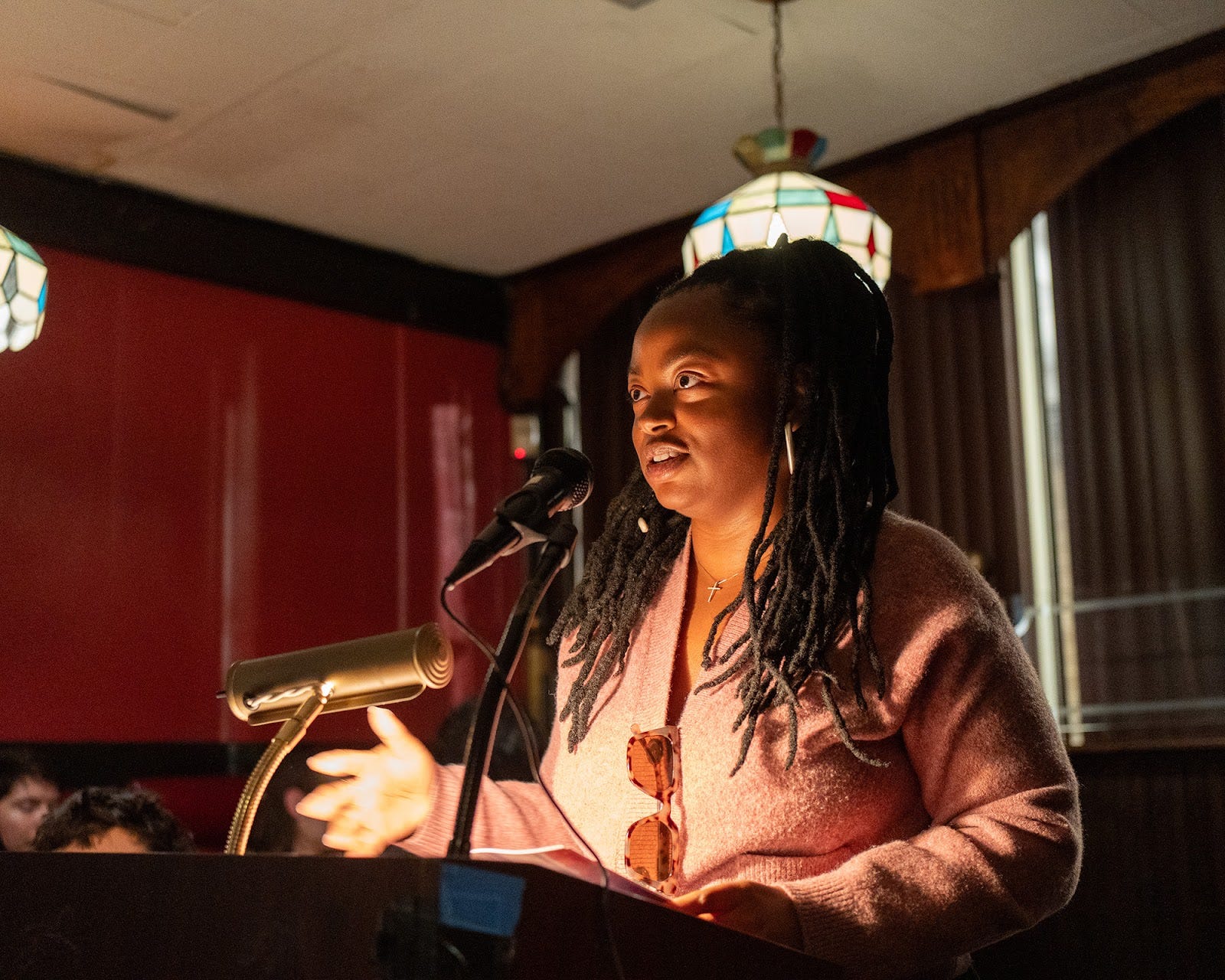
Sitting back down at the reading, I realized I was, in fact, wasted because I had committed the amateur mistake of drinking before eating dinner. I thought, fuck, it’s triage time. I need piping hot chicken fingers to survive the night. As Jonathan read a poem by a poet who planned to perform but then couldn’t be there tonight, Donald Berger, someone got a shepherd’s pie delivered from the bar. The woman ducked in front of the podium where Jonathan stood, and then ducked in front of him again, plateful of shepherd’s pie in her hands. sadé powell read concrete poetry that criticized our very scary technocratic world, but in a way that made me laugh, because she put together phrases in exciting and dynamic ways. Next, was Theo Thimo, a poet aptly described as “if Tao Lin and Frank O’Hara had a baby.” He read from a novel he was working on, and I felt like I was watching over his shoulder as he typed in a Google Doc. The last poet was re/on Nguyễn, who was introduced as having a “severity and ingenuity” that evoked Simone Weil and Clarice Lispector. She kept up the emerging theme of dog poems and read:
“…I’m happy
to have found that
the chihuahuas are still
at the temple, plumper than ever”
Drunk, I wrote down a note to my future self: “chihuahuas, beagles, shepherd’s pie.”
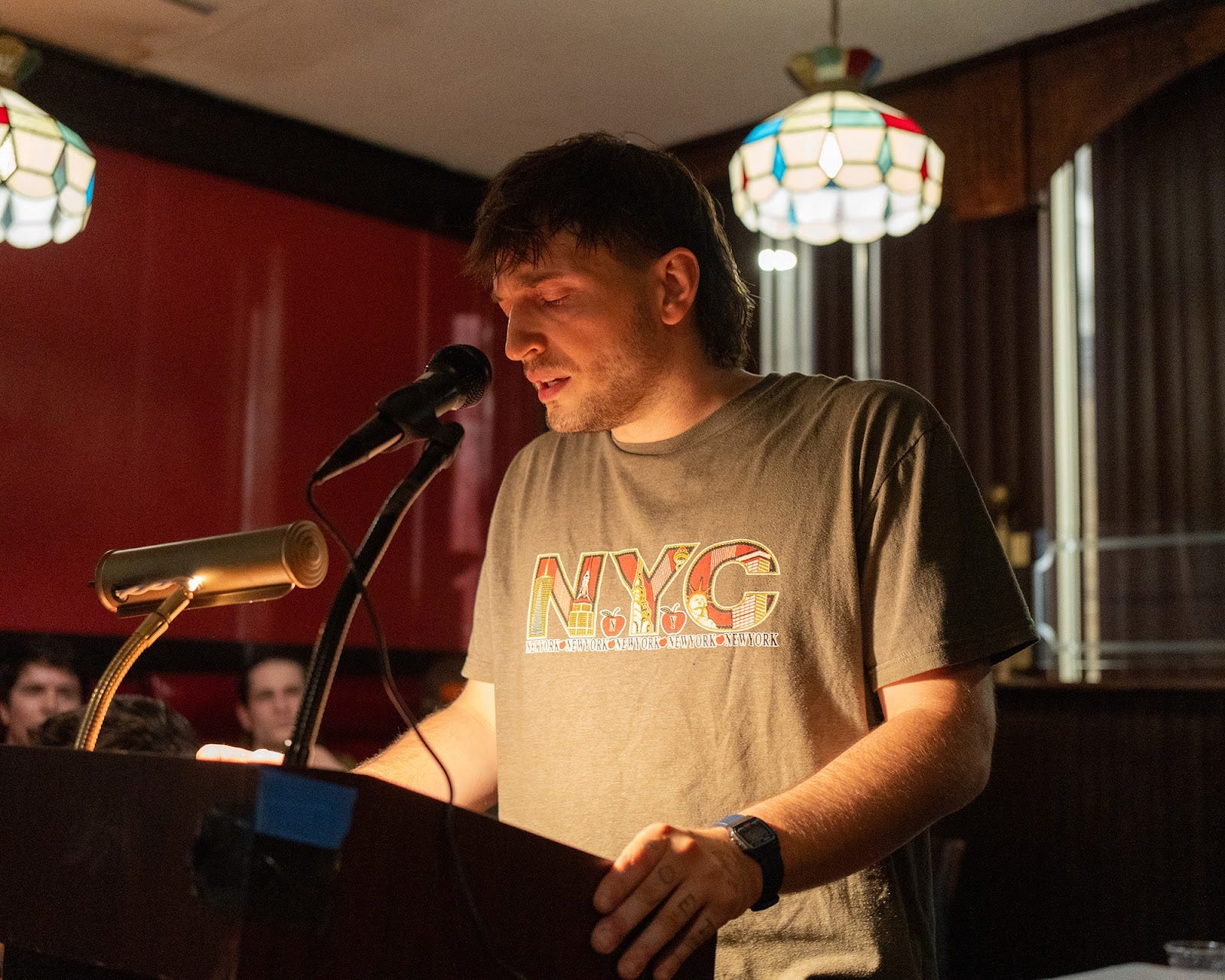
We all applauded and cheered for the poets and for Jonathan. I milled around, talking to people I hadn’t seen in years. The energy was happy and sweet, like a friend’s birthday party, friends of friends meeting each other and striking up conversations.
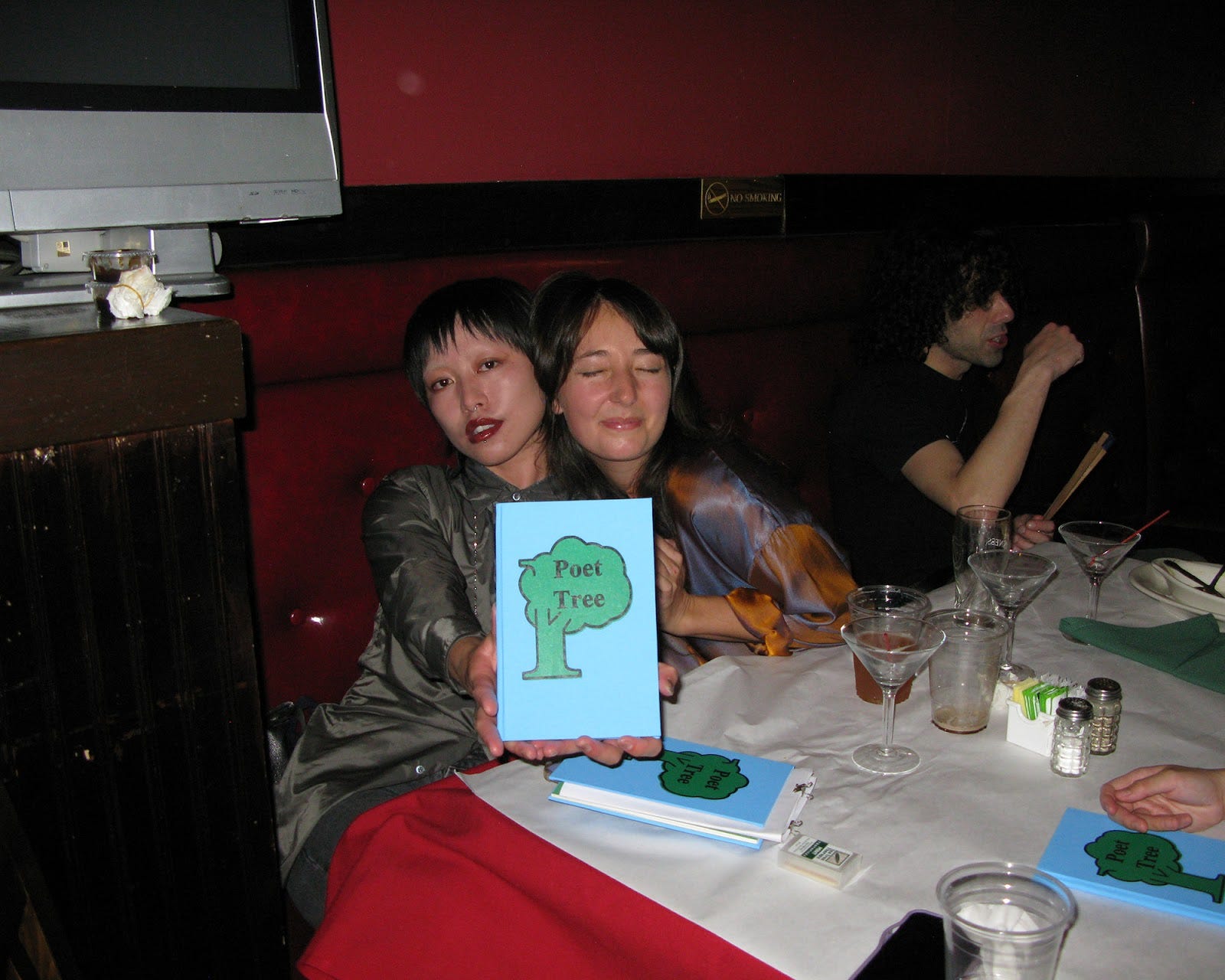
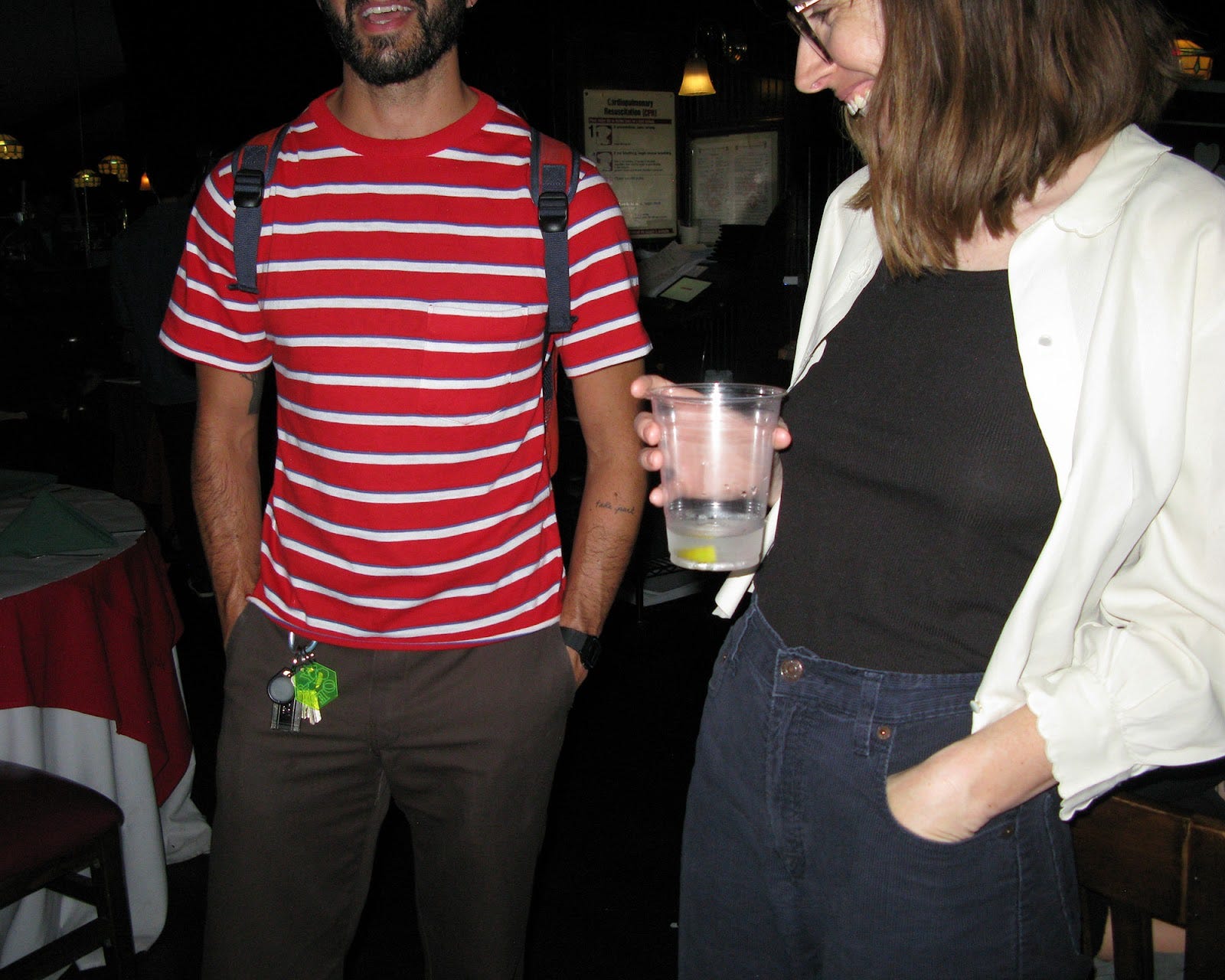
After people started leaving, I realized it was now or never for the chicken fingers, which were as good as everybody said. On our way home, Jonathan, his partner Mira, and I ended up getting ice cream.
In the morning, I woke up, miraculously not hungover—the triage had worked, the chicken fingers, the ice cream! I had survived. I ate a bagel with cream cheese and tomato, paid too much for coffee, and took the train back to Philly.
The launch combined the best parts of a poetry event—friends meeting with friends and a wide range of talented readers. You can find a PDF of the magazine here, or, if you’d like to experience its precious object-hood first-hand, buy it here. I hope you find a poet you might not have heard of before and branch out from there.
 |
|
In love with the concept!!! Very cool
can't wait to get out and attend readings and support other writers