

ESSAY: Love Comes Back
On Hera Lindsay Bird’s Juvenilia


MFA program discourse was once again making its rounds on the internet. Everyone wanted to know if graduate school was of any value or just an unequivocal and elaborate scam. I could not decide on which side I landed. When I thought of my own experience in a Creative Writing program, nearly nine years ago, I pictured first the huge unbudging number with its many digits and punctuation marks in my loan servicing account, and then standing in a circle in a classroom enacting iambic pentameter by bobbing up and down like children, and finally the Hera Lindsay Bird quote: “Now I have a masters degree in poetry and no longer wet myself.” At 23, those thousands of dollars had seemed a small price to pay for the brand new life I was sure awaited me there in California where real poets wrote real poems. My life until then had been in anticipation of my actual life, thus far unbegun and waiting in the world beyond my small Idaho hometown, the real world of urbanity and ideas and literature. Money meant nothing to me; I wanted my life to begin.
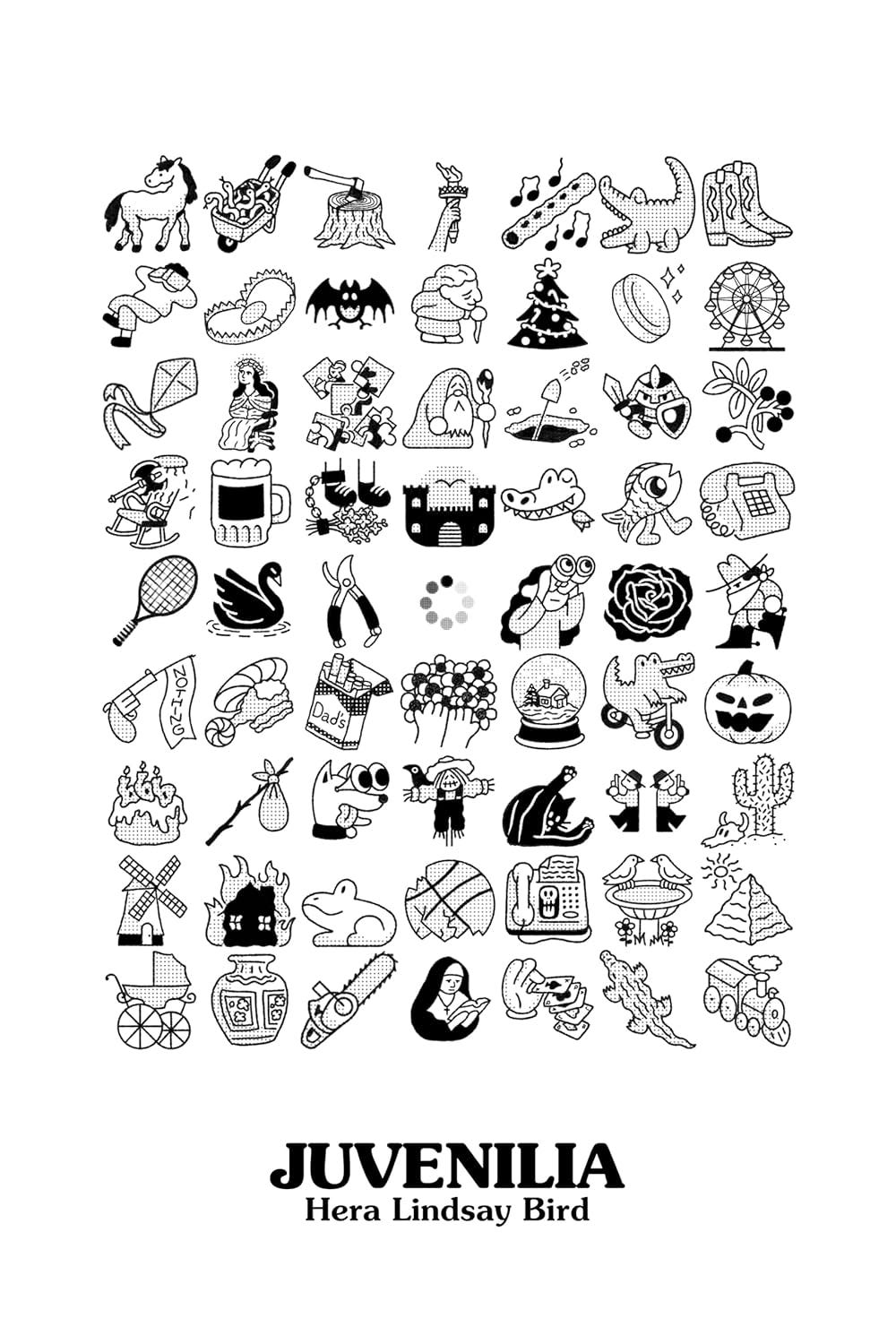
In June of 2025, Deep Vellum released Juvenilia, a US edition of Hera Lindsay Bird’s poetry, much of which was previously published in New Zealand and the UK in Hera Lindsay Bird and the chapbook, Pamper Me To Hell and Back. I first encountered Bird’s work shortly after starting graduate school in 2017, and its effect on me had been total and profound—a balm, a loosening, an opening through which I stepped and really did enter the rest of my life. Looking back, it’s this book that elicited the transformation I’d hoped to experience in graduate school, though of course the transformation did not result in the shiny new hemmed-in shape I’d expected to fit right into. Bird’s poems were funnier than anything I’d ever read, embracing a rather crass sense of irreverence, an attitude in direct contrast to the one with which I’d entered poetry school. Bird ridiculed the solemnity of poetry and poets and their lofty ideals of the form’s ethereal unparalleled significance by utilizing frank, imaginative humor to depict the rather ordinary and often repetitive themes of love, relationships, and “the boredom of life.” I had started my MFA with a certain image in mind of what being a Poet meant. I had wanted the poems I would write in my program to prove me intelligent and ennobled, righteous and profound; I had wanted to become singular, important, uniquely complex. Before reading Hera Lindsay Bird by Hera Lindsay Bird, I hadn’t known poetry could be like this, or that I might like it better like this—intimate, weird, conversational, hilarious. Really I hadn’t known poetry could be quite so free.
A few weeks ago, when I picked up a copy of Juvenilia at the bookstore near the bar where I work now in Brooklyn, I wondered if, having read and written and learned what I had in the years since my MFA, I would be disappointed by Bird’s work. Would I find her childish, trite, saccharine? Would I find her humor obnoxious and manufactured? Would reading Juvenilia fracture the connection between the past and present? Would it, on the other hand, reveal the stagnant energy and directionlessness—maybe I hadn’t really read that much; maybe I had learned nothing since then—that had characterized the years between my MFA and now? How had I changed? What had changed? Could rereading Bird now define these years, this period of indefinite movement through time?
***
In the first poem of Juvenilia, Bird positions herself as a skeptic of the oft-assumed reverential quality of literature, particularly poetry, and the attending presumptuousness of its writers. To be a poet is not some mystical aspiration or spiritual calling; rather, it is comparable to being “fourteen, and wet[ting] yourself extravagantly / At a supermarket checkout … stand[ing] in the tepid under-halo / Of your own self-making.” This resistance to poetry’s reputation as gaudy mysticism or priestly profundity—its tendency toward self-aggrandizement, forced affect, its distance from and supremacy over reality—becomes a common theme throughout this book, and this opening poem situates Bird’s speaker in a somewhat precarious and contradictory position, where she remains for the duration of the collection. She ridicules the sentimentalism of poetry while she engages in it, which elicits a labyrinthine entanglement of sincerity and sarcasm, meaning and irony.
To be accused of the cardinal sin of sentimentalism in poetry implies that one’s emotional tonality is a manufactured one, melodramatic and insincere. On the other hand, isn’t this precisely what poetry is—feeling turned fabricated, made into language? Bird simultaneously rejects the sentimental by utilizing colloquial diction and a cheeky sense of humor, while she embraces it explicitly and thematically. “To be alive / Is the greatest sentimentality there is,” she writes.
And I live to be sentimental
And I love to be alive
Always weeping at the end of a movie
Over the frosted carriages of yesteryear
I find it difficult to untangle distinct threads of irony versus sincerity here; “I live to be sentimental” could be read as an obvious joke, except that there seems some truth to it given the way in which Bird has revealed sentimentality as an essential tenet of human existence. It might be similarly tempting to read the baldly optimistic sentence that follows as a sarcastic distraction from the actual agony of living, except that she’s very clearly having a lot of fun. Maybe fun isn’t reason enough to genuinely “love to be alive,” but while Bird’s sarcasm is palpable here, there seems to me a note of sincerity alongside it, emphasized both by the pure pleasure of lines like “You can get away with anything in a poem / As long as you say my tits in it,” and the quieter admission that comes later: “I wrote this book, and it is sentimental / because I don’t have a right-sized reaction to the world.” There is a reason for all this overblown feeling: it is hard to live.
The quiet resonance of this startlingly simple line does not linger in its plain wisdom, however; instead it’s interrupted—irony undercuts sincerity and sincerity undercuts irony so endlessly it becomes woven, inseparable. In this poem and throughout the book, Bird embraces a campy, performative emotional register, poking fun at the ineffectual theatrics of poetic language while participating in it so ironically it almost starts to look sincere.
***
Graduate school was not what I had envisioned. I was constantly frustrated for what seemed to me conflicting reasons, namely the lack of dedication and rigor expressed by my classmates, and my own intellectual shortcomings. It was as if there was a poet-shaped space I had thought measured my exact dimensions, but instead of filling it in, I remained outside—distractible, too tall, a little shy. I found myself struggling to identify the various literary references my classmates lobbed into discussions and then rolling my eyes when those same classmates hadn’t prepared notes for workshop.
I remember the immediate panic of my impulsive affection for Bird’s weird, funny poems as I read them in the copy room I used as an office for my job as an assistant to the program administrator. Was I allowed to like this? These poems were so plain, so committed to their puny limited “I,” except this “I” was also infinitely playful, so ridiculous she became vast, expansive. “The official theme of this poem,” Bird writes in “Having Already Walked Out On Everyone I Ever Said I Loved,” “is / The official theme of all my poems which is / You get in love and then you die!” Wasn’t this a rather banal and unsophisticated aesthetic, not to mention her eagerness to announce it so explicitly? Did all these love poems imply a myopic worldview and a generally shallow intelligence? Was this good poetry disguised as bad poetry or just bad poetry? What did my affinity say about me? Was this real poetry? Was I a real poet?
My classmates and professors were always talking about “language,” and these conversations made me feel tsunamied by the shame of my ignorance. The medium of language was an ungraspable concept to me; I just wanted to tell people things. I seemed to be missing the whole point. I had envisioned a life of solemn reverence to and meticulous consideration of Yeats, Frost, Keats; instead the poem upon which my life suddenly hinged was called “Keats Is Dead So Fuck Me From Behind.” And I remember, in a rare moment of near-clarity in which the actual feeling of the thing outweighs its interpretive variations and discursive rationales—by which I mean, of course, listening to my own stupid little trying heart—reading on—“I love you standing in the water wearing the river // like an invisible pair of shoes”—lit up, delighted, new.
***
In “New Things,” Bird laments “the point of saying new things” and, simultaneously, the point of questioning “the point of saying new things” with characteristic blunt humor that reveals a more complicated inquiry: “What is there to say about the world that hasn’t already been? / More to the point, / Who gives a shit?”
Here, poetry is superfluous to a reality whose utter simplicity (“three-thousand-years of grass and wind … And trees”) and strange beauty (“small lights falling / Like snow on a virgin rollercoaster”) remains unreachable despite her various attempts to describe it. There is, after all, no route to reality via language, rendering all the new things we say inevitable failures to reach it; we would probably be better off giving up: “We should all move to the country and fuck each other’s brains out.” But here she is writing a poem about how futile it is to write poems.
Still, there are better things to be than original
So maybe I can say jazz apothecary
Or ham pantyliner
But it gives me no pleasure
To mean so little
And get so far away with it
Across the book, Bird circles these ideas with poems that often depict ordinary narratives—falling in love, feeling jealous, getting high, “Wast[ing] My Life,” “Watching Six Seasons of the Nanny”—with wild lyric expressions and exclamations. Her themes are overtly feminine, fixated on romance and sex, relationships and bodies, personal feeling. The chatty tonality and blunt humor express an unapologetic individualism, a sense of self as singular as it is self-assured—even if, at times this self is assured only of her right to be unsure, insecure. Bird’s loyalty to her own voice—crass, gossipy, unsophisticated, and in turn achingly tender, often quite simple—comes across as breathtakingly refreshing, now as it did then, a deeply permissive sense of belief in telling one’s own stories—telling people things—not despite the questionable value of doing so, nor necessarily because of it, but for some alternative, ancillary, spectral purpose. Life is stupid and ordinary and “weird and full of heat / Crocodiles asleep in their red tent of hunger,” and poetry is stupid and ordinary and “there’s nothing in this world worth doing / But shaking our heads in awe.” And saying so.
Through Bird’s poetry, I began to ascertain my own aesthetic affinities. My classmates could have their Norse mythology, their Grecian urns, their secret codes and the vague aesthetic quality everyone spoke of so admiringly when, it seemed, they had nothing else to say: sonics. Oh yes, they said, it is so pleasing to the ear. I wanted to live my life and say how it was for me. Maybe I didn’t care if how it was wasn’t real poetry. It was my life. I could set it to my own music.
My newfound sense of humor was not particularly well-received by my peers, who often cautioned me against such irreverence given Our Troubled Times—this was early in Trump’s first term: the rise of identity politics, me-too feminism, wokeness. Popular contemporary poetry was often didactic, earnest, committed to an explicit sense of civic duty, and there was a general sense that diverging from this aesthetic was comparable to condoning our nation’s slide into fascism. I didn’t care. I had uncovered a fresh source of energy in my poems, a wide open field, a previously unimaginable, delicious uninhibitedness. Freedom, as Bird defines it in “The Problem with Being a Woman,” was “to be able to think of whatever you want all the time / a cat who is also a dentist / a wheelbarrow full of silver snakes.” I was free!
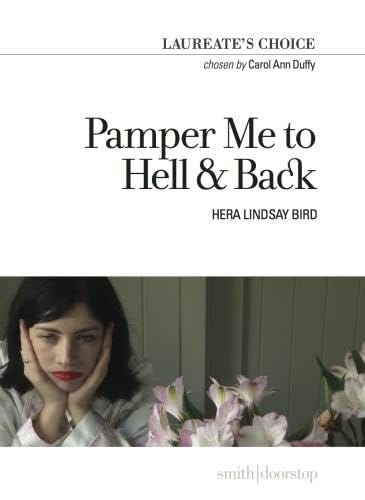
And so their criticism only encouraged me. I would shuffle out of the classroom in the late evening after workshop, smirking to myself, feeling probably too self-righteous about my singular ability to diagnose their worse self-righteousness, reciting whole stanzas of Bird’s poem, “Untitled 404,” excluded from Juvenilia but published in Pamper Me To Hell And Back, in my head:
Once there was a time in which I had many ideologies
Many self-pleasing ideologies with which to chastise others
The theme of these ideologies was: however wrong you are, that is the exact amount I
am right by
I felt them in my blood like too much money
***
What I failed then to recognize or articulate about “New Things,” and Bird’s poetics more generally, was the way in which irony loops back on itself—screams around in ever-widening loops and then finds itself familiarly back home where it started. Which is also where I found myself, if metaphorically, reading Juvenilia a few weeks ago, so long after that first encounter—after graduation, after moving back to Idaho and then leaving Idaho again, after multiple New York City apartments, after the man who quoted Bird’s poems back to me after I read them to him: “You make my life feel the size of itself,” I’d say, and he’d say, “i feel it down in the corners of my sarcophogus,” and the aftermath of him when all words became flimsy slipping-off things. It was nearly spring. Poetry was everything. The whole point was invention.
Bird claims that there are “better things to be than original” in a poem original in both implicit and explicit ways—only she could have written this poem because only she wrote it and because it contains a phrase as ridiculous, unprecedented, and indeed nonsensical, as “jazz apothecary.” The stated point here is that writing poetry is futile, foolish—all ideas are recycled ideas and we would be better off living our real lives than trying and failing to say something interesting, new, or true about them. But this stated disdain for poetry is proffered within a poem, and a particularly and purposefully original one at that, thus exposing the irony of the poem’s ideological stance. This irony is unraveled even further when Bird claims that she derives “no pleasure” from her meaningless wordplay when in fact it seems obvious that the only reason such patently absurd phrases as “ham pantyliner” exist in the poem are for their irreverent, undeniable pleasures. She is not wrong when she says these funny phrases “mean so little.” But such a statement begs the question: what can poetry mean at all insofar as language can ever really mean anything, signifier irretrievably separate from signified? What kind of poem is granted the hallowed status of meaningful; what kind of phrase means more than “so little”?
In “How Is Literature Possible?” Maurice Blanchot writes that literature exists “despite the inherent absurdity that lives in it, divides it, and makes it actually inconceivable.” Bird takes particular interest in this absurdity across her body of work, conveying it variously, via decidedly unpoetic language, nonsensical wordplay, and explicit statements of purpose. All of this is an attempt to “call into question in an inexpressible way what [s]he is and what [s]he does,” per Blanchot. Reed Merrill, in an essay on Kierkegaard, writes that irony “is dialogical, pluralistic, paradoxical and ambivalent; it is open-ended and polyphonic, dialectically unreliable and unconventional, and philosophically indeterministic.” Bird’s poetry expresses the inexpressible through this kind of irony, creating an effect of dizzying multivocality, a both/and simultaneity which is both absurd and essential, sentimental and sarcastic, implicit and explicit. Reading Bird’s poetry, one has the sense that each line should be said with a smirking little wink, which hides beneath it a shivering, genuine emotion, which hides beneath it a smaller smirking little wink, and on and on, endless nesting dolls of winking and smirking and crying and crying.
Despite these multiple meanings and contradicting ideologies, Bird resists the temptation to acquiesce to or accept meaninglessness entirely. Language does not disintegrate here into aesthetics, despite her irreverent, unwieldy humor. She still wants to mean something; she reaches toward narrative despite knowing it’s impossible. In a 2018 interview in The Guardian, Bird says that her collection should be read as “personal poetry,” despite understanding such loyalty to the truth is often derided in literary circles. “I can’t help it,” she says. “I just want someone to tell me how to live.” Saying new things about real life is a fool’s errand when there is real living to be done, and yet there is such joy and pleasure to be found in the attempt, an effort which perhaps does in fact constitute real living. Poetry is mostly meaningless, and yet it is precisely this frivolity that makes the effort of making, shaping, inventing it so meaningful to one’s real life—we form our own meaning.
This trajectory seemed to have a similar looping movement as my experience of reading Bird again after all these years: a gesture that circled and circled back on itself, a familiar arrival that was not stagnant or regressive. Whereas reading Bird the first time was an introduction to a new version of what was possible of myself and of poetry, reading her now felt more like returning to that self, which was both utterly the same and obviously different. Oh, I thought, there I am.
***
“Art,” writes the artist Hannah Wilke, “is for life’s sake.” In Juvenilia, Bird takes as a subject the distance between art and life, art’s inevitable failure to reach life. In “Ways of Making Love,” she writes: “writing poetry about fucking / when you could be fucking / is the last refuge of the stupid.” The poems are invested in both their own futility and also the medium of that futility—the inexpressibility of even the question of herself, of poetry, much less its attendant answer. “Life is real,” she writes in a later poem, a gesture toward the actuality of the world beyond the words on the page while the poem itself remains confined to language and symbols. That other actual world remains uncontainable, narrativeless. A gesture is all we can muster. It is totally insufficient, and yet it is precisely this process of falling short that perhaps best captures what it is to live in the shapeless tilting of the real—a movement, both into and out of. Knowing and not knowing, meaning and not meaning. Bird asserts the pointlessness of language while sort of… participating in it anyway.
While writing this, and too, while I read this book for the first time all those years ago, I often fell back on some insistence that I just loved it—I didn’t care why and I didn’t care whether or not it was technically crafted or good—I loved it. What felt so profound about Bird was in part that I couldn’t define it—because these poems were explicitly not profound but also because they so effortlessly slipped into simple profundities; because they were nonsensical and silly and because they made perfect inarguable sense to me. I can articulate now a more solid rationale, but there remains some sense of this effusive, certain impulse, and I feel defensive of it—of the value of my own mysterious affinities, of my own inalienable and irretrievable subjectivity, of my own desire to just tell people things. There she is, my younger self, in all her cheesy naivete, her stupidity and unfettered belief in poetry.
I had wanted to be a new person, but of course I found I was still myself in California, like I am still myself now in New York. You cannot escape yourself, but maybe you can make yourself up. Is there a difference? Bird told me how to live. Sort of. Bird’s book gave me what I thought was a roadmap but turned out to be a handmade drawing, based on no real interstates. It was a bad one, a fake one, a fabrication. I called it the beginning of my life and so it was the beginning of my life, full of sentimentalism and true things that weren’t true at all. So it was all a joke! I found it very funny. In my real life I laughed out loud.
 | A guest post by
|
wonderful piece, really enjoyed this essay!
What a great piece! I really enjoyed hearing about your love and appreciation of this woman's work. I must admit, I've never heard of her, but because of your own colorful and truthful account of its impact on you, then and now, I'm curious to read more!