

COLUMN: The Projectionist #6
3 Women: Horror Edition


Spooky season is upon us, as they say. Spirit Halloween stores have reemerged like annual cicadas; Hulu is promoting Huluween one more time before Disney swallows them whole; Turner Classic Movies is airing The Brain That Wouldn’t Die (1962) as I type this; and Dumpkin Spice Dude Wipes are back on the shelves.
Furthermore, it is a time of year when movie fans make lists of horror films to watch while the leaves decay and an autumn chill cuts the air.
In my last column, I mentioned the general trend of movie studios investing more in horror movies rather than comedies and where a handful of comedians have also shifted their focus. Upon closer inspection, however, it is an area of moviemaking where more women are staking their claim, taking advantage of creative opportunities within the genre that maybe had yet to have been explored.
I have selected three women filmmakers who have made their mark playing in the horror sandbox but adding their own colors to the mix, as it were, raising questions of what constitutes a horror film, or, perhaps, what elevates it.
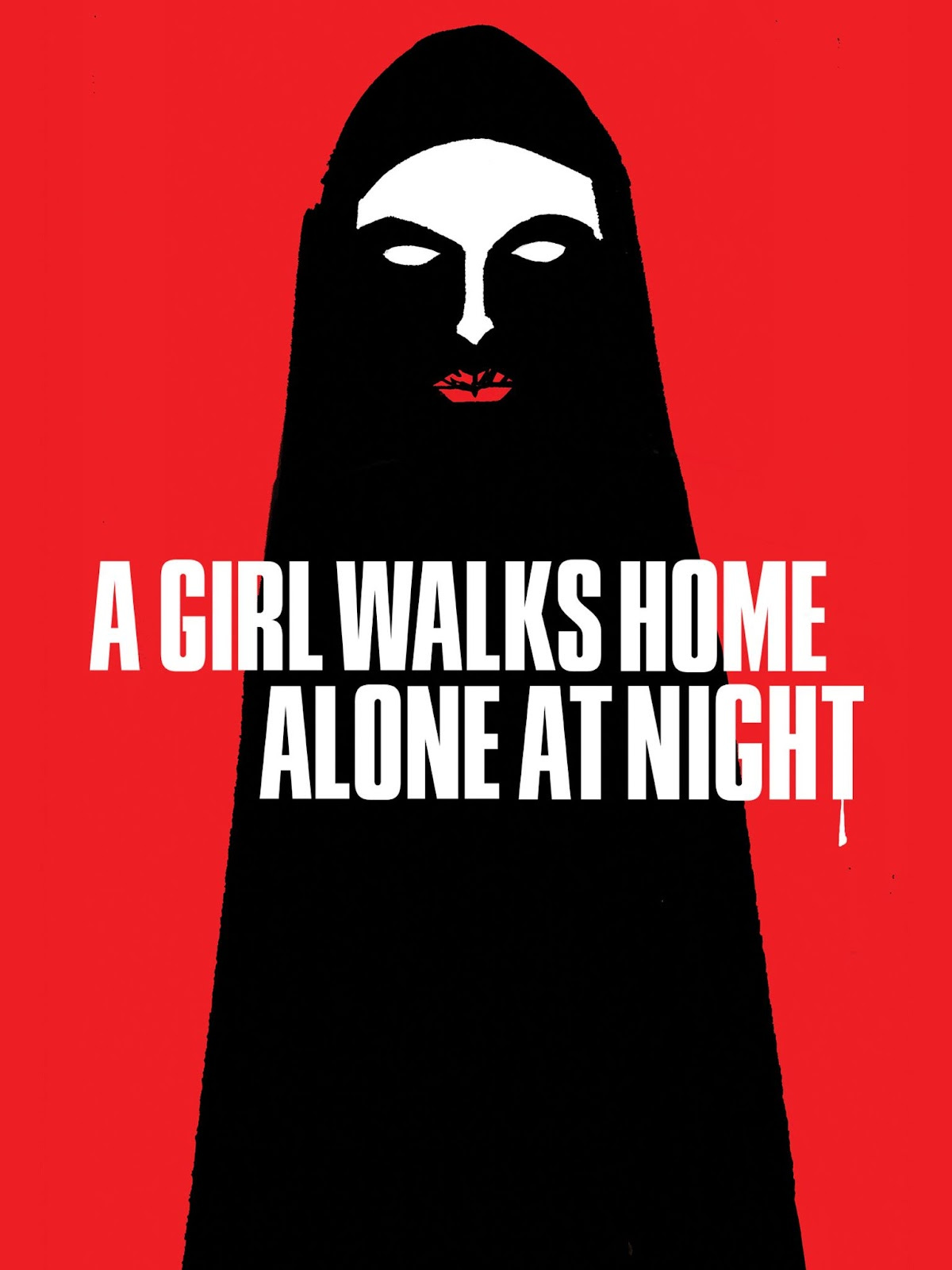
In 2014, before an arthouse horror film boom would soon occupy indie theaters with filmmakers like Ari Aster (Hereditary), Robert Eggers (The Witch), Jane Schoenbrun (We’re All Going to the World’s Fair) and several others leading the charge with their unique spins on the genre, Ana Lily Amirpour’s A Girl Walks Home Alone At Night premiered at the Sundance Film Festival.
Amirpour’s black-and-white, Farsi-language debut is a feminist vampire Western set in the fictitious, crime-ridden Iranian near-ghost town of Bad City. The story follows a lonely big-eyed female music-loving vampire, credited as “The Girl” (Sheila Vand) who preys on men who disrespect women, while simultaneously developing a connection with a young man named Arash (Arash Marandi). The film juxtaposes elements of horror, Westerns, French New Wave, and romance, exploring themes of alienation and justice, without a heavy hand, through its striking visual style and narrative.
The feature is based on Amirpour’s eponymous short film which screened at film festivals and won some awards. She launched an Indiegogo campaign to fund her full-length feature version, raising almost $57,000 to finance the production that was shot in twenty-four days. She said the reason she took on the project was because she was lonely and she makes films to make friends and find real intimacy.
The dialogue is sparse and the pacing deliberate. Some of the takes are long, shot beautifully in Cinescope, using anamorphic lenses to create widescreen images, which accents the desolation and loneliness in the film. In one scene, The Girl wears a chador riding a skateboard in the middle of the frame and it feels like an instant iconic image. Later, in another scene, she and Arash discuss music and Lionel Richie’s “Hello,” prompting him to tell her, “Sad songs hit the spot, don’t they?” Then, she has him pierce her ears so she can wear the earrings he has gifted her. It’s as tender a scene as it is quietly visceral, holding its own with cinematic moments from Jean-Luc Godard or David Lynch.
The camera confidence, slow builds, memorable images and exchanges, don’t just suggest French New Wavers or arthouse veterans, but American films, too. With its EDM soundtrack needle-drops and hints of familial melodrama, you could imagine Jim Jarmusch or Francis Ford Coppola plotting this out on a plane ride from the West Coast to the East Coast. Though Amirpour was born in England to Iranian parents, she was raised in California in the ‘80s and ‘90s on Steven Spielberg films, Sergio Leone Westerns, and reading Anne Rice. All the influences cross-pollinate and bear fruit here, creating not pastiche but something that feels at once familiar and new.
Your mileage may vary in terms of whether the film should be labeled “horror” or not. Is it a horror film with arthouse elements? Is it an art film with a few horror tropes? Is it a feminist film, or is Amirpour trying to say something about Iranian politics? Does it matter? In a 2014 interview with Film Comment, she said she’s not consciously trying to comment on anything:
“I personally am not setting out to make any comment about anything. She’s just a lonely girl who’s a vampire, and she’s trying to give meaning to what she does, so she tries to look for a moral quotient… They’re searching for something in this loneliness. I mean, that’s what I am and that’s why I made the film.”
It’s also clear Amirpour isn’t interested in classifications. She wants to work with people and make things. Even what I’m doing here in this column, singling out female filmmakers playing within the horror genre, she would likely reject, uninterested in defined labels and tired terminology. In a 2022 interview with Dazed promoting her third film Mona Lisa and the Blood Moon, Amirpour begrudges the “female filmmaker” classification, but also reveals what may be her filmmaking superpower:
“I never felt invited into any social thing. I think outsiders can be extremely powerful for that reason. It means you never rely on groupthink. You rely on yourself, and judge everything independently. Groupthink is the poison of humanity… I’m in a position where it’s my third film and I’ve been around. There are people that want to hear what I have to say. There are young kids that might Google me ten years from now and find this article. Maybe something in there will give them something good to think about that’s different from the same repeated kind of terminology that doesn’t mean anything. I’m not just a female filmmaker – I’m a weirdo artist.”
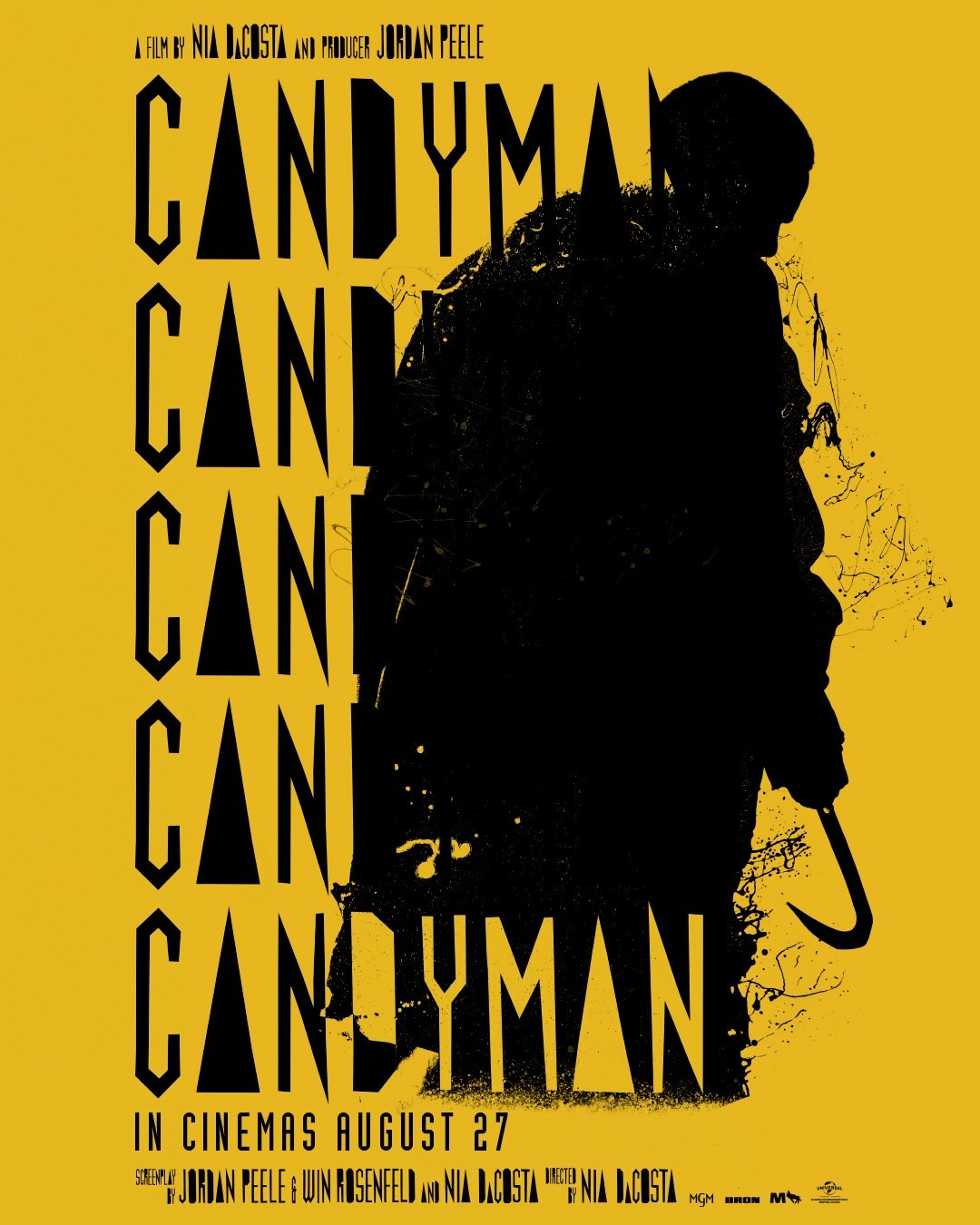
When Nia DaCosta’s horror film Candyman was released in 2021, the focus in the press seemed to be as much on Get Out director/Oscar winner Jordan Peele’s involvement as a producer/co-writer as it was on DaCosta’s direction. Nonetheless, when the film was released, DaCosta became the first Black female director to debut a film at number one at the U.S. box office.
Candyman is a direct sequel to the 1992 horror cult classic, which was based on Clive Barker’s story “The Forbidden,” while also reimagining the urban legend for a new audience. The film centers on Anthony McCoy (Yahya Abdul-Mateen II), a visual artist living in Chicago’s now-gentrified Cabrini-Green neighborhood, who becomes fascinated and inspired by the Candyman myth, the one where in front of a mirror you say his name five times and he shows up to kill. As Anthony delves deeper into the lore and history of the area, he inadvertently reawakens the vengeful spirit, leading to a series of brutal murders and an unsettling physical transformation, forcing him to confront his own connection to the menacing legend.
DaCosta combines the traditional structure of a supernatural horror film with social commentary, conjuring themes of racial injustice, artistic appropriation, and the cyclical nature of trauma. I mean, not many horror films exist where after the end credits roll, a website offering more information on racial injustice and supporting Black artists appears. Some critics thought the film was preachy, didactic, and soulless, others thought it couldn’t explore these issues adequately within the confines of an hour and a half horror feature. That said, there are much worse ideas than having gentrification and displacement as the backdrop for a rebooted horror story.
What is probably under-discussed is DaCosta’s blocking and framing of shots where what she doesn’t show is equally as creepy as what she does. Even more creative is her use of shadow puppets for exposition and backstory sequences, evoking century-old German Expressionism by using stark imagery to tell a tragic story as if it were a campfire tale. These sequences were the most inspired in the film and indicate to me that DaCosta was probably restrained somewhat in terms of her creative input. I look forward to seeing more ideas like this with her future efforts.
Like Amirpour, DaCosta was able to produce her first feature, Little Woods, based on a short film she had previously made. When the feature was well-received, she got the Candyman gig, then jumped to making Marvel’s The Marvels. She’s returning to more intimate storytelling later this year with Hedda, an adaptation of Henrik Ibsen’s Hedda Gabler, and is circling back to horror once again, directing 28 Years Later: The Bone Temple, the next installment of the 28 Days Later film series.
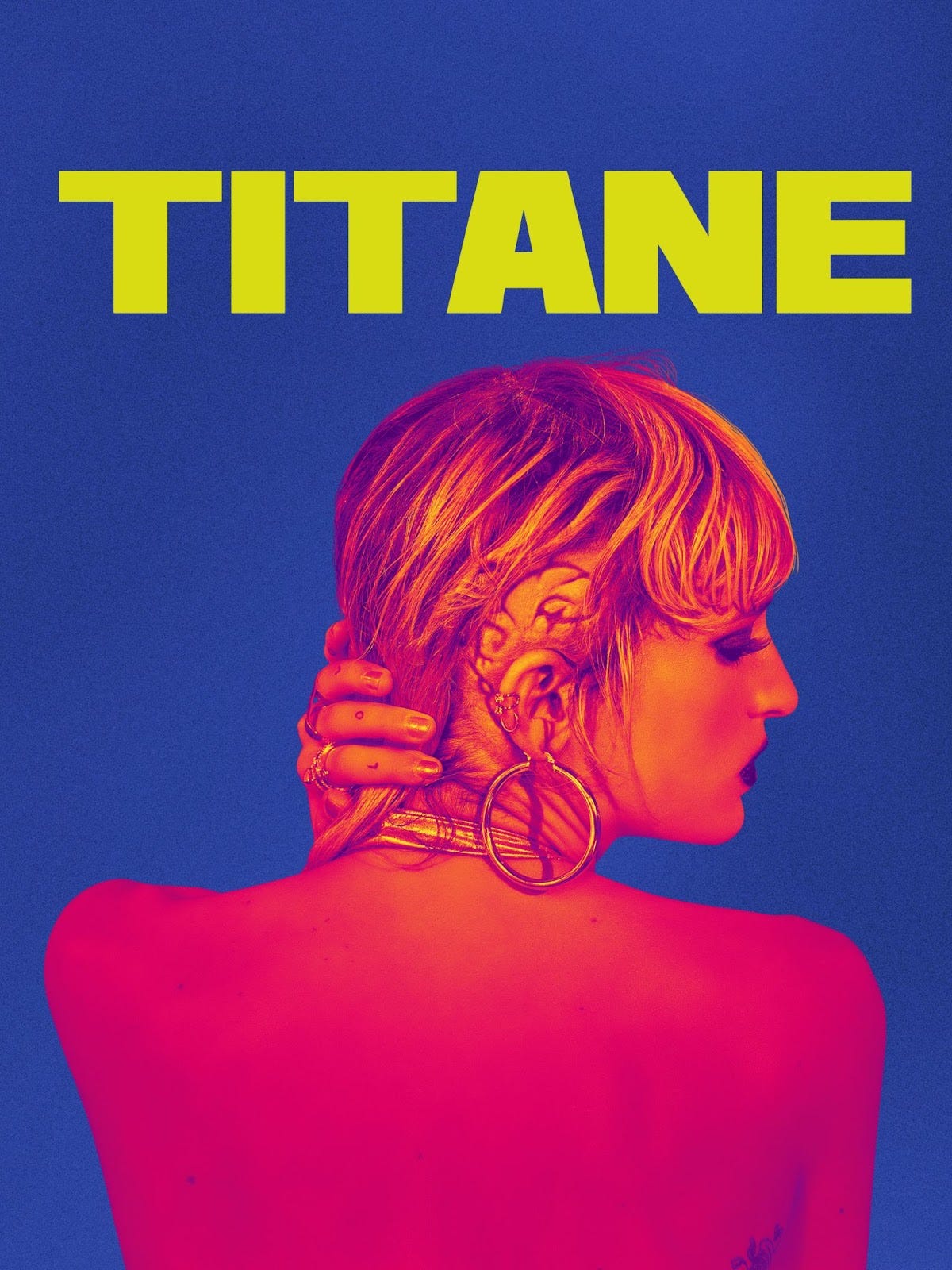
Cinema du corps means “cinema of the body” and French filmmaker Julia Ducournau has written and directed three features and a short film all within the body horror subgenre, a category centering on the grotesqueries of the human body or disturbing psychological offenses to biological bodies in general. This is perhaps unsurprising for the daughter of a gynecologist mother and dermatologist father.
Ducournau’s second feature, Titane (2021), received the Palme d’Or at the Cannes Film Festival, making her the second female director to win the prestigious award. I don’t want to give too much away, but the story focuses on Alexia (Agathe Rousselle), a dancer with a titanium plate in her head from a childhood car accident, who develops a sexual fetish for cars. After committing a series of brutal crimes, she disguises herself as a missing boy and is taken in by a lonely, grief-stricken fire captain, Vincent (Vincent Lindon).
Titane delves into themes of gender identity, family, and the fluidity, vulnerability, and resilience of the human body through its shocking and visceral imagery. It pushes the envelope of body horror while maintaining an underlying current of unexpected tenderness, cutting the wheel sharp in the middle, traveling a route not many horror films take.
The images are provocative and the sound design snaps, cracks, stabs, and tears enough flesh to make you wince and squirm, but there is a twisted beauty to all of it and control of the camera and rhythm and performances that stand with the masters of the form. If we are more than our bodies, when the bodies withstand and morph and break to the point of disfiguration, who are we then? This is a question at the heart of many body horror stories, but even they can be vastly different, at least to a purveyor of the subgenre like filmmaker David Cronenberg.
In a 2022 interview with IndieWire, Cronenberg said of Titane:
“I liked the film a lot. She’s got a really strong visual sense. I know she’s said how much of an influence my filmmaking has been, but it’s basically in the sense of unlocking her own sensibility, which is unique. She’s got a really strong visual sense and a sense of the absurd, the extreme. Her films are totally not like my films.”
Ducournau’s latest body horror feature, Alpha, will be distributed by Neon Films in the United States in the coming months and will open the 58th Sitges Film Festival today, October 9, 2025.
I would be remiss not to mention there are many other women who have distinguished themselves making notable horror films I could have also easily chosen to discuss here: Rose Glass (Saint Maud), Coralie Fargeat (The Substance), Jennifer Reeder (Perpetrator), Amanda Nell Eu (Tiger Stripes), Jennifer Kent (The Babadook, The Nightingale), Karyn Kusama (Jennifer’s Body, The Invitation), and Issa López (Tigers Are Not Afraid), just to name a select few.
It is also interesting to note that the films mentioned here, and indeed, many horror films in general, suggest the idea that often the biggest, scariest monster is the one creeping around within us, or the one we believe we see in ourselves. All of the lead characters in The Girl Walks Home Alone at Night, Candyman, and Titane must reckon with “a monster within” in one fashion or another. Maybe we all do, and that’s why horror cinema continues to thrive.
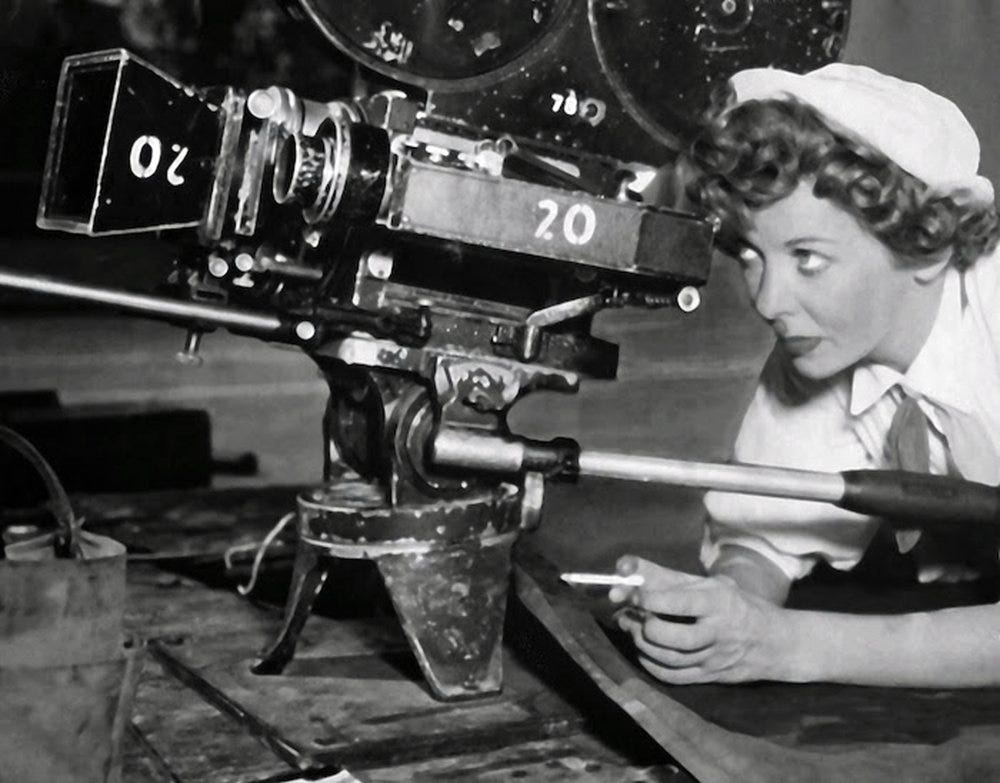
The conceit reminds me of a quote by Ida Lupino, a British-American actress from the 1930s and ‘40s who, in 1949, started directing films herself, including the thrillers Outrage (1950) and The Hitch-Hiker (1953). She made movies in an era where women filmmakers were nearly nonexistent. She helped forge a path for women filmmakers of today, subverting male-dominated hierarchies and acknowledging that, ultimately, her biggest threat was herself.
In an interview where Lupino discussed her detractors, she said:
“I’m mad, they say. I am temperamental and dizzy and disagreeable. Well, let them talk. I can take it. Only one person can hurt me. Her name is Ida Lupino.”
This is a really fantastic installment of the protectionist
I think about Titane all the time, such a great movie, and I really enjoyed Raw from Ducournau, too.